- Downloads
- Sounds
- projects.esu.eu
- LokSound 5 North American and Australian Sound files
#90 SCR BLW 2-10-0  H0 N XL L M4
- Article numbers:S0799
- Last change: 9/29/2026
- Manufacturer: ESU

Strasburg Rail Road (Great Western) No. 90 is a 2-10-0 "Decapod" type steam locomotive owned and operated by the Strasburg Rail Road outside of Strasburg, Pennsylvania. Built by the Baldwin Locomotive Works in 1924, No. 90 originally pulled sugar beet trains for the Great Western Railway of Colorado. In 1967, No. 90 was sold to the Strasburg Rail Road where it now resides and operates today for use on excursion trains. As of today, No. 90 is one of only two operational Decapod type steam locomotives in America, the other being Frisco No. 1630 at the Illinois Railway Museum in Union, Illinois.
The locomotive was built by the Baldwin Locomotive Works in June 1924, in Philadelphia. it originally pulled sugar beet trains of about 40 to 50 cars length for the Great Western Railway of Colorado to the company's towering mill in Loveland, Colorado. It was the Great Western's largest and most powerful road locomotive, and saw extensive use on trains too large for the company's fleet of 2-8-0s. On November 7, 1944, the engine was hit by a truck at a grade crossing east of Loveland and knocked onto its fireman's side, killing both the fireman and the truck driver. The Great Western sent 90 to the Chicago, Burlington and Quincy Railroad's shops in Denver for repairs. Following WWII, the locomotive was used primarily in the Autumn during the harvest season.
By the late 1950s, the engine was occasionally used in excursion service on the Great Western. In 1963, No. 90 pulled a few special excursions for that year's National Railway Historical Society Convention, were it was held in Denver at the time. On one such excursion, Strasburg Rail Road's Chief Mechanical Officer, Huber Leath, met the Great Western's superintendent, a man who grew up in the vicinity of the Strasburg Rail Road and struck a deal in which the Great Western would contact the Strasburg Rail Road as soon as the engine was available for purchase. The Strasburg Rail Road purchased No. 90 on April 5, 1967, for a price of $23,000.00(~$175,000 in 2019) and the locomotive arrived on Strasburg's property a month later on May 5, 1967.
In the winter of 1968, Ross Rowland's High Iron Company planned to operate a series of mainline steam excursions between Jersey City, New Jersey and Wilkes-Barre, Pennsylvania on the Central Railroad of New Jersey. Rowland had originally planned to lease two ex Canadian Pacific G5-class 4-6-2s, numbers 1238 and 1286, both owned by George M. Hart. However, those two locomotives were on emergency leases to the city of Reading, Pennsylvania to provide steam for the city after the boiler at the Reading Steam Heat and Power Co. became disabled. Since tickets for the excursion had already been sold, and Rowland was unwilling to pull the trip with a diesel, he leased Steamtown's ex Canadian Pacific 127 (formerly 1278), a sister to the two locomotives he intended to use to pull the train. However, the 127 did not have enough power to pull the train over the grades on the CNJ near Jim Thorpe, Pennsylvania on her own and Rowland leased the 90 to act as a helper engine for the trips, double-heading with the 127 between Bethlehem and Jim Thorpe, Pennsylvania. After the trips concluded, No. 90 was returned to Strasburg.
As it was on the Great Western, the engine is also the most powerful of the four steam locomotives in operation at the Strasburg Rail Road in Lancaster County, Pennsylvania, rated for 1,211 tons on the line. It is currently one of the only two 2-10-0 Decapods operating in the United States, the other one is former Frisco No. 1630, which operates at the Illinois Railway Museum.
No. 90 has had numerous modifications during its time at Strasburg, the most recent being in 2013, in which it was repainted in a new paint scheme similar to what it originally wore back in the 1990s. Differences include the yellow pin striping and lettering, which is currently painted / stenciled in white. Its smokebox was painted silver, and its number plate was black. In 2015, No. 90 went through another modification, where its smokebox color changed from silver to brown. After this modification, 90 was to return to service in February 2016. As of January 2023, No. 90 is still operational, but in early 2024, it is currently undergo its Federal Railroad Administration (FRA) federally mandated 1,472-day boiler inspection and overhaul.
Whistles:
CV163=0 SCR #90
CV163=1 SP&S 3-Chime
CV163=2 PRR 3-Chime
CV163=3 NKP #765
CV163=4 MILW #261
CV163=5 Hooter
CV163=6 Hancock Long Bell 3-Chime
CV163=7 DRGW #346
Bells:
CV164=0 #90 SCR Bell 1
CV164=1 Pnuematic Bell 2
CV164=2 Rope Pull Bell
CV164=3 SOO Line 1003 Bell
Brake Squeal:
CV165=0 Brake Squeal #1 Long
CV165=1 Brake Squeal #1 Short
CV165=2 Brake Squeal #2 Long
CV165=3 Brake Squeal #2 Short
CV165=4 Brake Squeal #3 Long
CV165=5 Brake Squeal #4Short
Dynamos:
CV166=0 SCR #90 Dynamo
CV166=1 K27 463 Dynamo
Air Pumps
CV167=0 Cross Compound #1 Soo Line 1003
CV167=1 Cross Compound #2 K27 463
CV167=2 Single Stage #1 Z27
CV167=3 SCR #90
Reversers
CV168=0 Johnson Bar
CV168=1 Power Reverse
The ESU Full Throttle Steam files now include a few new logic features for added operational realism while still leaving you in control of HOW YOU wish to run your locomotive.
Heavy Load: F9 by default.
Similar to the “Drive Hold” button on the Full Throttle Diesel files “Heavy Load” allows you to adjust the “Steam Cut Off Valve” at any speed allowing for a fierce full chuff or drifting with snifters and rod clanks. Heavy load can also act as an offset allowing speed adjustments when engaged if desired.
Coast: F4 by default.
Opposite of “Heavy Load” Coast allows for a negative offset allow drifting sounds of Rods and snifter valves at any speed. You again have the option to hold the speed to adjust the speed with this offset active. Even allowing for an increase of speed with no chuffs as if drifting downhill.
Independent brake: F10 by default
Identical to the Full Throttle Diesel files. This allows for the locomotive to stop more quickly than its regular momentum would normally carry it. This one is pretty self-explanatory – just press the brake and come to a stop! For additional options there are 3 Braking rates that can be set up for user preference.
Articulation: Sound Slot 2
By adding Sound Slot 2 to the F8 Function Mapping and enabling the "Secondary Trigger" (CV250) you can add a second set of drivers making any ESU Steam File articulated.
Function Mappable Air Horn: F21 by default
Sound Slot 21.
Many Steam locomotives had a single chime airhorn equipped. Those modelling SP, MILW, and others can now have this feature and put it where they would like in the function mapping in addition to the whistle.
S0799 - Release Notes
===================================================
V-1 R-1:
===================================================
- new project
V-2 R-2:
===================================================
-remastered the SCR #90 whistle Hide description more…
H0 N XL L M4
- Article numbers
- S0799
- Last change
- 9/29/2026
- Manufacturer
- ESU
#261 MILW ALCO 4-8-4 H0 N XL L M4
- Article numbers:S0792
- Last change: 5/8/2026
- Manufacturer: ESU
Recorded from MILW #261 S3 Class 4-8-4
We would like to give a special thanks to the "Friends of the 261" for their help in this project. to find out more about their operation or to book a ride please go to: https://261.com/
Milwaukee Road 261 is a class "S3" 4-8-4 "Northern" type steam locomotive built by the American Locomotive Company (ALCO), in Schenectady, New York in July 1944, for the Chicago, Milwaukee, St. Paul and Pacific Railroad, often referred to as the "Milwaukee Road".
It was used for heavy mainline freight work until being retired by the railroad in 1956. Instead of being cut up for scrap, 261 was preserved and donated to the National Railroad Museum in Green Bay, Wisconsin in 1958. Today, the locomotive is owned, operated, and maintained by Minneapolis-based nonprofit organization Friends of the 261, which runs occasional and seasonal excursion trains using the locomotive. The steam engine, restored in 1993,[1] has logged more than 25,000 miles (40,000 km) under its own power since that time.
While recorded from an MILW S3 Class Northern this file can be used for many large locomotives in many wheel arrangments.
Whistles:
CV163=0 MILW 261 Shop Built 3 Chime
CV163=1 ATSF 5 Chime as used on the MILW 261
CV163=2 DL&W 5 Chime as used on the MILW 261 when lettered for Lackawanna
CV163=3 SP 4449 Daylight
CV163=4 B&M 5 Chime
CV163=5 Western Maryland 6 Chime
CV163=6 PRR Banshee #1
CV163=7 DRG&W 484
CV163=8 DRG&W 5 Chime
CV163=9 N&W Hooter
CV163=10 Soo Line 1003
Bells:
CV164=0 MILW #261 Bell
CV164=1 Pnuematic Bell 2
CV164=2 Rope Pull Bell
CV164=3 SOO Line 1003 Bell
CV164=4 DRG&W K27 Bell
Brake Squeal:
CV165=0 Brake Squeal #1 Long
CV165=1 Brake Squeal #1 Short
CV165=2 Brake Squeal #2 Long
CV165=3 Brake Squeal #2 Short
CV165=4 Brake Squeal #3 Long
CV165=5 Brake Squeal #4Short
Dynamos:
CV166=0 Soo Line 1003 Dynamo
CV166=1 K27 463 Dynamo
CV166=2 T16.1 Dynamo
Air Pumps
CV167=0 Cross Compound #1 Soo Line 1003
CV167=1 Cross Compound #2 K27 463
CV167=2 Single Stage #1 Z27
CV167=3 Westinghouse Single Stage 9" Air Pump HVSR #3
Reversers
CV168=0 Johnson Bar
CV168=1 Power Reverse
The ESU Full Throttle Steam files now include a few new logic features for added operational realism while still leaving you in control of HOW YOU wish to run your locomotive.
Heavy Load: F9 by default.
Similar to the “Drive Hold” button on the Full Throttle Diesel files “Heavy Load” allows you to adjust the “Steam Cut Off Valve” at any speed allowing for a fierce full chuff or drifting with snifters and rod clanks. Heavy load can also act as an offset allowing speed adjustments when engaged if desired.
Coast: F4 by default.
Opposite of “Heavy Load” Coast allows for a negative offset allow drifting sounds of Rods and snifter valves at any speed. You again have the option to hold the speed to adjust the speed with this offset active. Even allowing for an increase of speed with no chuffs as if drifting downhill.
Independent brake: F10 by default
Identical to the Full Throttle Diesel files. This allows for the locomotive to stop more quickly than its regular momentum would normally carry it. This one is pretty self-explanatory – just press the brake and come to a stop! For additional options there are 3 Braking rates that can be set up for user preference.
Articulation: Sound Slot 2
By adding Sound Slot 2 to the F8 Function Mapping and enabling the "Secondary Trigger" (CV250) you can add a second set of drivers making any ESU Steam File articulated.
Function Mappable Air Horn: F21 by default
Sound Slot 21.
Many Steam locomotives had a single chime airhorn equipped. Those modelling SP, MILW, and others can now have this feature and put it where they would like in the function mapping in addition to the whistle.
S0792 - Release Notes
===================================================
V-4 R-3:
===================================================
- updated independent brake
- updated boiler hiss
- updated steam chuff sound slot
V-5 R-4:
===================================================
-sound schedule correction to change rods to power reverse/johnson bar in the stop box to match other steam files Hide description more…
H0 N XL L M4
- Article numbers
- S0792
- Last change
- 5/8/2026
- Manufacturer
- ESU
#484 CTS BLW 2-8-2 H0 N XL L M4
- Article numbers:S0791
- Last change: 5/8/2026
- Manufacturer: ESU
Recorded from Cumbres and Toltec #484
We would like to give a special thanks to the Cubres and Toltec Scenic Railroad for their help in this project. To find out more about their operation or to book a ride please go to: https://cumbrestoltec.com/
The Denver and Rio Grande Western K-36 class are ten 3 ft (914 mm) narrow gauge 2-8-2 "Mikado" type steam locomotives built for the Denver and Rio Grande Western Railroad (D&RGW) by Baldwin Locomotive Works. They were shipped to the Rio Grande in 1925 and were first used along the Monarch Branch and Marshall Pass, but were later sent to the Third Division out of Alamosa. Of the original ten, four are owned by the Durango and Silverton Narrow Gauge Railroad (D&SNG) and five by the Cumbres and Toltec Scenic Railroad (C&TS). Number 485 fell into the turntable pit at Salida and was scrapped in Pueblo in 1955, with many parts being saved.
The locomotives are of outside-frame design, with the driving wheels placed between the two chassis frames which support the boiler, but with the cylinders, driving rods, counterweights and valve gear on the outside. This general arrangement is shared with the earlier K-27, K-28 and later K-37 Mikado engines.
Whistles:
CV163=0 HVSR #3 Crosby 3 Chime"
CV163=1 D&RGW 5 Chime
CV163=2 Soo Line 1003
CV163=3 SP 4449 Daylight
CV163=4 Single Chime Hooter
CV163=5 CN 4 Chime
CV163=6 PRR Banshee #1
CV163=7 D&RGW 484
CV163=8 D&RGW 463
CV163=9 D&RGW 488
Bells:
CV164=0 #3 HVSR Bell 1
CV164=1 Pnuematic Bell 2
CV164=2 Rope Pull Bell
CV164=3 SOO Line 1003 Bell
CV164=4 D&RGW K27 Bell
Brake Squeal:
CV165=0 Brake Squeal #1 Long
CV165=1 Brake Squeal #1 Short
CV165=2 Brake Squeal #2 Long
CV165=3 Brake Squeal #2 Short
CV165=4 Brake Squeal #3 Long
CV165=5 Brake Squeal #4Short
Dynamos:
CV166=0 Soo Line 1003 Dynamo
CV166=1 K27 463 Dynamo
Air Pumps
CV167=0 Cross Compound #1 Soo Line 1003
CV167=1 Cross Compound #2 K27 463
CV167=1 Cross Compound #3 SP 4449
CV167=1 Cross Compound #4 UP 844
CV167=2 Single Stage #1 Z27
CV167=3 D&RGW #484 Pump
Reversers
CV168=0 Johnson Bar
CV168=1 Power Reverse
The ESU Full Throttle Steam files now include a few new logic features for added operational realism while still leaving you in control of HOW YOU wish to run your locomotive.
Heavy Load: F9 by default.
Similar to the “Drive Hold” button on the Full Throttle Diesel files “Heavy Load” allows you to adjust the “Steam Cut Off Valve” at any speed allowing for a fierce full chuff or drifting with snifters and rod clanks. Heavy load can also act as an offset allowing speed adjustments when engaged if desired.
Coast: F4 by default.
Opposite of “Heavy Load” Coast allows for a negative offset allow drifting sounds of Rods and snifter valves at any speed. You again have the option to hold the speed to adjust the speed with this offset active. Even allowing for an increase of speed with no chuffs as if drifting downhill.
Independent brake: F10 by default
Identical to the Full Throttle Diesel files. This allows for the locomotive to stop more quickly than its regular momentum would normally carry it. This one is pretty self-explanatory – just press the brake and come to a stop! For additional options there are 3 Braking rates that can be set up for user preference.
Articulation: Sound Slot 2
By adding Sound Slot 2 to the F8 Function Mapping and enabling the "Secondary Trigger" (CV250) you can add a second set of drivers making any ESU Steam File articulated.
Function Mappable Air Horn: F21 by default
Sound Slot 21.
Many Steam locomotives had a single chime airhorn equipped. Those modelling SP, MILW, and others can now have this feature and put it where they would like in the function mapping in addition to the whistle.
S0791 - Release Notes
===================================================
V-4 R-3:
===================================================
- updated independent brake
- updated boiler hiss
- updated steam chuff sound slot
V-5 R-4:
===================================================
-sound schedule correction to change rods to power reverse/johnson bar in the stop box to match other steam files Hide description more…
H0 N XL L M4
- Article numbers
- S0791
- Last change
- 5/8/2026
- Manufacturer
- ESU
#3 HVSR BLW 0-6-0 H0 N XL L M4
- Article numbers:S0790
- Last change: 5/8/2026
- Manufacturer: ESU
Recorded from Hocking Valley Scenic Railway #3
We would like to give a special thanks to the HVSR for their help in this project. to find out more about their operation or to book a ride please go to: https://www.hvsry.org/
The 0-6-0 configuration was the most widely used wheel arrangement for both tender and tank steam locomotives. The type was also widely used for diesel switchers (shunters). Because they lack leading and trailing wheels, locomotives of this type have all their weight pressing down on their driving wheels and consequently have a high tractive effort and factor of adhesion, making them comparatively strong engines for their size, weight and fuel consumption. On the other hand, the lack of unpowered leading wheels have the result that 0-6-0 locomotives are less stable at speed. They are therefore mostly used on trains where high speed is unnecessary.
Since 0-6-0 tender engines can pull fairly heavy trains, albeit slowly, the type was commonly used to pull short and medium distance freight trains such as pickup goods trains along both main and branch lines. The tank engine versions were widely used as switching (shunting) locomotives since the smaller 0-4-0 types were not large enough to be versatile in this job. 0-8-0 and larger switching locomotives, on the other hand, were too big to be economical or even usable on lightly built railways such as dockyards and goods yards, precisely the sorts of places where switching locomotives were most needed.
While recorded from an early 1920 0-6-0 this file can be used for smaller locomotives in many wheel arrangments.
Whistles:
CV163=0 HVSR #3 Crosby 3 Chime"
CV163=1 DRG&W 5 Chime
CV163=2 Soo Line 1003
CV163=3 SP 4449 Daylight
CV163=4 Single Chime Hooter
CV163=5 CPR 2317
CV163=6 Western Maryland 6 Chime
CV163=7 CN 4 Chime
CV163=8 PRR Banshee #1
CV163=9 DRG&W 484
Bells:
CV164=0 #3 HVSR Bell 1
CV164=1 Pnuematic Bell 2
CV164=2 Rope Pull Bell
CV164=3 SOO Line 1003 Bell
CV164=4 DRG&W K27 Bell
Brake Squeal:
CV165=0 Brake Squeal #1 Long
CV165=1 Brake Squeal #1 Short
CV165=2 Brake Squeal #2 Long
CV165=3 Brake Squeal #2 Short
CV165=4 Brake Squeal #3 Long
CV165=5 Brake Squeal #4Short
Dynamos:
CV166=0 Soo Line 1003 Dynamo
CV166=1 K27 463 Dynamo
CV166=2 T16.1 Dynamo
Air Pumps
CV167=0 Cross Compound #1 Soo Line 1003
CV167=1 Cross Compound #2 K27 463
CV167=2 Single Stage #1 Z27
CV167=3 Westinghouse Single Stage 9" Air Pump HVSR #3
Reversers
CV168=0 Johnson Bar
CV168=1 Power Reverse
The ESU Full Throttle Steam files now include a few new logic features for added operational realism while still leaving you in control of HOW YOU wish to run your locomotive.
Heavy Load: F9 by default.
Similar to the “Drive Hold” button on the Full Throttle Diesel files “Heavy Load” allows you to adjust the “Steam Cut Off Valve” at any speed allowing for a fierce full chuff or drifting with snifters and rod clanks. Heavy load can also act as an offset allowing speed adjustments when engaged if desired.
Coast: F4 by default.
Opposite of “Heavy Load” Coast allows for a negative offset allow drifting sounds of Rods and snifter valves at any speed. You again have the option to hold the speed to adjust the speed with this offset active. Even allowing for an increase of speed with no chuffs as if drifting downhill.
Independent brake: F10 by default
Identical to the Full Throttle Diesel files. This allows for the locomotive to stop more quickly than its regular momentum would normally carry it. This one is pretty self-explanatory – just press the brake and come to a stop! For additional options there are 3 Braking rates that can be set up for user preference.
Articulation: Sound Slot 2
By adding Sound Slot 2 to the F8 Function Mapping and enabling the "Secondary Trigger" (CV250) you can add a second set of drivers making any ESU Steam File articulated.
Function Mappable Air Horn: F21 by default
Sound Slot 21.
Many Steam locomotives had a single chime airhorn equipped. Those modelling SP, MILW, and others can now have this feature and put it where they would like in the function mapping in addition to the whistle.
S0790 - Release Notes
===================================================
V-9 R-4:
===================================================
- updated independent brake
- updated boiler hiss
- updated steam chuff sound slot
V-10 R-5:
===================================================
-sound schedule correction to change rods to power reverse/johnson bar in the stop box to match other steam files Hide description more…
H0 N XL L M4
- Article numbers
- S0790
- Last change
- 5/8/2026
- Manufacturer
- ESU
UP 4-8-8-4 Big Boy H0 N XL L M4
- Article numbers:S0516
- Last change: 5/8/2026
- Manufacturer: ESU
Equipped with ESU "FULL THROTTLE STEAM" features!
During the late 1930s, the Union Pacific often used helpers to move trains from Ogden to Wasatch. The UP wanted to simplify this move so they asked their "Department of Research and Mechanical Standards" (DoRMS) to design a locomotive that could pull a 3600 ton train unassisted over the 1.14% grade of the Wasatch.
The designers determined that to pull a 3600 ton train, a tractive effort of 135,000 lbs would be needed. Assuming a factor of adhesion of 4.0, the weight on drivers would have to be 4.0 * 135,000 = 540,000 lbs. Given an axle loading of 67,500 lbs each, this would require 8 drivers or an x-8-8-x wheel arrangement. The designers agreed upon the 4-8-8-4 design. Next, the horsepower and cylinder sizes were computed based on 300 psi boiler pressure. Although they weren't planning to pull these freight trains at 80 MPH, the DoRMS designed them for 80 MPH in order to have a sufficient factor of safety built into the design. What resulted is considered by many to be the most successful articulated steam locomotive ever built. 4000 was delivered to Omaha at 6PM, September 5, 1941.
The 25 Big Boys were built in two groups. The first group, called "class 1", were built starting in 1941. They were numbered 4000-4019. The second group, "class 2", were built in 1944. They were numbered 4020-4024. The last revenue freight pulled by a Big Boy was in July of 1959. Most were retired in 1961. The last one was retired in July of 1962. As late as September, 1962, there were still four operational Big Boys at Green River, WY.
The ESU Full Throttle Steam files now include a few new logic features for added operational realism while still leaving you in control of HOW you wish to run your locomotive.
Heavy Load: F9 by default.
Similar to the “Drive Hold” button on the Full Throttle Diesel files “Heavy Load” allows you to adjust the “Steam Cut Off Valve” at any speed allowing for a fierce full chuff or drifting with snifters and rod clanks. Heavy load can also act as an offset allowing speed adjustments when engaged if desired.
Coast: F4 by default.
Opposite of “Heavy Load” Coast allows for a negative offset allow drifting sounds of Rods and snifter valves at any speed. You again have the option to hold the speed to adjust the speed with this offset active. Even allowing for an increase of speed with no chuffs as if drifting downhill.
Independent brake: F10 by default
Identical to the Full Throttle Diesel files this is a custom feature created by using logic inside sound slot 11. This allows for the locomotive to stop more quickly than its regular momentum would normally carry it. This one is pretty self-explanatory – just press the brake and come to a stop!
Articulation: Sound Slot 2
By adding Sound Slot 2 to the F8 Function Mapping you can add a second set of drivers making any ESU Steam File articulated.
Function Mappable Air Horn: F21 by default
Sound Slot 21.
Many Steam locomotives had a single chime airhorn equipped. Those modelling SP, MILW, and others can now have this feature and put it where they would like in the function mapping in addition to the whistle.
Whistles:
CV163=0 UP 844 "Steamboat" - Default
CV163=1 SP&S 3 Chime
CV163=2 Steamboat 3 Chime
CV163=3 SP 4449 Daylight
CV163=4 DRG&W 5 Chime
CV163=5 SOO Line 1003
CV163=6 DL&W 5 Chime
CV163=7 WM 6 Chime
CV163=8 UP #4014 Hancock 3-Chime
Bells:
CV164=0 Pnuematic Bell 1
CV164=1 Pnuematic Bell 2
CV164=2 Pnuematic Bell 3
CV164=3 Steam Loco Rope Pull Bell
CV164=4 SOO Line 1003 Bell
CV164=5 UP 844 Air Ringer Bell - Default
CV164=6 SP 4449 Bell
CV164=7 DRG&W K27 Bell
For more info please see the "Full Throttle Steam" Quick Start Guide in the ESU Instruction Manual Section of our Website.
http://www.esu.eu/en/downloads/instruction-manuals/digital-decoders/
S0516 - Release Notes
===================================================
V-3 R-3:
===================================================
- updated independent brake
- updated boiler hiss
- added UP #4014 Hancock 3-Chime horn
V-4 R-4:
===================================================
- updated steam chuff sound slot
V-5 R-5:
===================================================
- changed whistle sound slot 3 maximum sound slot speed to 128
V-6 R-6:
===================================================
- steam chuff secondary trigger distance adustment to 10
V-7 R-7:
===================================================
-sound schedule correction to change open cylinders + smoke to power reverse in the stop state to match other steam files Hide description more…
H0 N XL L M4
- Article numbers
- S0516
- Last change
- 5/8/2026
- Manufacturer
- ESU
UP 4-6-6-4 Challenger H0 N XL L M4
- Article numbers:S0556
- Last change: 5/8/2026
- Manufacturer: ESU
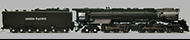
Equipped with ESU "FULL THROTTLE STEAM" features!
The name Challenger was given to steam locomotives with a 4-6-6-4 wheel arrangement. This means that they have four wheels in the leading "pilot" truck, which helps guide the locomotive into curves; two sets of six "driving" wheels, and finally, four "trailing" wheels, which support the rear of the engine and its massive firebox. Each set of driving wheels has its own steam cylinder. In essence, the result is two engines under one boiler.
The frame of the locomotive is "articulated," or hinged, to allow it to go through curves. When watching the approaching locomotive go through a curve, you can see the boiler swing out left or right independently of the lower half of the engine, as the rear half of the locomotive remains in a straight direction until its wheels and frame are halfway through the curve.
The Challengers were designed for fast freight service, but occasionally pulled passenger trains.
The ESU Full Throttle Steam files now include a few new logic features for added operational realism while still leaving you in control of HOW you wish to run your locomotive.
Heavy Load: F9 by default.
Similar to the “Drive Hold” button on the Full Throttle Diesel files “Heavy Load” allows you to adjust the “Steam Cut Off Valve” at any speed allowing for a fierce full chuff or drifting with snifters and rod clanks. Heavy load can also act as an offset allowing speed adjustments when engaged if desired.
Coast: F4 by default.
Opposite of “Heavy Load” Coast allows for a negative offset allow drifting sounds of Rods and snifter valves at any speed. You again have the option to hold the speed to adjust the speed with this offset active. Even allowing for an increase of speed with no chuffs as if drifting downhill.
Independent brake: F10 by default
Identical to the Full Throttle Diesel files this is a custom feature created by using logic inside sound slot 11. This allows for the locomotive to stop more quickly than its regular momentum would normally carry it. This one is pretty self-explanatory – just press the brake and come to a stop!
Articulation: Sound Slot 2
By adding Sound Slot 2 to the F8 Function Mapping you can add a second set of drivers making any ESU Steam File articulated.
Function Mappable Air Horn: F21 by default
Sound Slot 21.
Many Steam locomotives had a single chime airhorn equipped. Those modelling SP, MILW, and others can now have this feature and put it where they would like in the function mapping in addition to the whistle.
Whistles:
CV163=0 UP 844 "Steamboat" - Default
CV163=1 SP&S 3 Chime
CV163=2 Steamboat 3 Chime
CV163=3 SP 4449 Daylight
CV163=4 DRG&W 5 Chime
CV163=5 SOO Line 1003
CV163=6 DL&W 5 Chime
CV163=7 WM 6 Chime
Bells:
CV164=0 Pnuematic Bell 1
CV164=1 Pnuematic Bell 2
CV164=2 Pnuematic Bell 3
CV164=3 Steam Loco Rope Pull Bell
CV164=4 SOO Line 1003 Bell
CV164=5 UP 844 Air Ringer Bell - Default
CV164=6 SP 4449 Bell
CV164=7 DRG&W K27 Bell
For more info please see the "Full Throttle Steam" Quick Start Guide in the ESU Instruction Manual Section of our Website.
http://www.esu.eu/en/downloads/instruction-manuals/digital-decoders/
S0556 - Release Notes
===================================================
V-3 R-3:
===================================================
- updated independent brake
- updated boiler hiss
V-4 R-4:
===================================================
- updated steam chuff sound slot
V-5 R-5:
===================================================
- changed whistle sound slot 3 maximum sound slot speed to 128
V-6 R-6:
===================================================
- steam chuff secondary trigger distance adustment to 10
V-7 R-7:
===================================================
-sound schedule correction to change open cylinders + smoke to power reverse in the stop state to match other steam files Hide description more…
H0 N XL L M4
- Article numbers
- S0556
- Last change
- 5/8/2026
- Manufacturer
- ESU
UP 4-8-4 FEF H0 N XL L M4
- Article numbers:S0590
- Last change: 5/8/2026
- Manufacturer: ESU
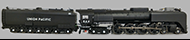
Equipped with ESU "FULL THROTTLE STEAM" features!
Recorded from UP FEF 4-8-4 Northern #844
Built in 1944 Steam Locomotive No. 844 is the last steam locomotive built for Union Pacific Railroad. Made for passenger service it also hauled some freight in the late 1950s. Still serving today it has become Union Pacific's "Living Legend" as it holds the world record for longest contiuosly running steam locomotive!
With 80 inch Drivers, 300lbs of boiler pressure, and designed to safely operate at 120 mph, this super heated locomotive has become an Icon of American Steam!
The ESU Full Throttle Steam files now include a few new logic features for added operational realism while still leaving you in control of HOW you wish to run your locomotive.
Heavy Load: F9 by default.
Similar to the “Drive Hold” button on the Full Throttle Diesel files “Heavy Load” allows you to adjust the “Steam Cut Off Valve” at any speed allowing for a fierce full chuff or drifting with snifters and rod clanks. Heavy load can also act as an offset allowing speed adjustments when engaged if desired.
Coast: F4 by default.
Opposite of “Heavy Load” Coast allows for a negative offset allow drifting sounds of Rods and snifter valves at any speed. You again have the option to hold the speed to adjust the speed with this offset active. Even allowing for an increase of speed with no chuffs as if drifting downhill.
Independent brake: F10 by default
Identical to the Full Throttle Diesel files this is a custom feature created by using logic inside sound slot 11. This allows for the locomotive to stop more quickly than its regular momentum would normally carry it. This one is pretty self-explanatory – just press the brake and come to a stop!
Articulation: Sound Slot 2
By adding Sound Slot 2 to the F8 Function Mapping you can add a second set of drivers making any ESU Steam File articulated.
Function Mappable Air Horn: F21 by default
Sound Slot 21.
Many Steam locomotives had a single chime airhorn equipped. Those modelling SP, MILW, and others can now have this feature and put it where they would like in the function mapping in addition to the whistle.
Whistles:
CV163=0 UP 844 "Steamboat" - Default
CV163=1 SP&S 3 Chime
CV163=2 Steamboat 3 Chime
CV163=3 SP 4449 Daylight
CV163=4 DRG&W 5 Chime
CV163=5 SOO Line 1003
CV163=6 DL&W 5 Chime
CV163=7 WM 6 Chime
Bells:
CV164=0 Pnuematic Bell 1
CV164=1 Pnuematic Bell 2
CV164=2 Pnuematic Bell 3
CV164=3 Steam Loco Rope Pull Bell
CV164=4 SOO Line 1003 Bell
CV164=5 UP 844 Air Ringer Bell - Default
CV164=6 SP 4449 Bell
CV164=7 DRG&W K27 Bell
For more info please see the "Full Throttle Steam" Quick Start Guide in the ESU Instruction Manual Section of our Website.
http://www.esu.eu/en/downloads/instruction-manuals/digital-decoders/
S0590 - Release Notes
===================================================
V-3 R-3:
===================================================
- updated independent brake
- updated boiler hiss
- updated steam chuff sound slot
V-5 R-5:
===================================================
-sound schedule correction to change open cylinders + smoke to power reverse in the stop state to match other steam files Hide description more…
H0 N XL L M4
- Article numbers
- S0590
- Last change
- 5/8/2026
- Manufacturer
- ESU
#765 NKP Berkshire 2-8-4 H0 N XL L M4
- Article numbers:S0843
- Last change: 5/8/2026
- Manufacturer: ESU
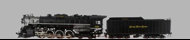
Nickel Plate Road 765 is a class "S-2" 2-8-4 "Berkshire" type steam locomotive built for the New York, Chicago & St. Louis Railroad, commonly referred to as the "Nickel Plate Road". In 1963, No. 765, renumbered as 767, was donated to the city of Fort Wayne, Indiana, where it sat on display at the Lawton Park, while the real No. 767 was scrapped in Chicago in 1964.
In the early 1970s, the newly formed Fort Wayne Railroad Historical Society (FWRHS) restored No. 765 and operate it in main line excursion service. During the 1980s to early 90s, No. 765 ran excursion trains on the ex-Southern Railway's CNO&TP division and ex-Chesapeake and Ohio's New River Gorge route. Taken out of service in 1993, No. 765 was added to the National Register of Historic Places on September 12, 1996.
The No. 765 locomotive was completely overhauled and returned to service in 2005. Since 2010, it visited the Cuyahoga Valley Scenic Railroad, hauling several excursions every year. From 2012 to 2015, No. 765 ran excursions on Norfolk Southern trackage in Indiana, Missouri, New York, Ohio, Pennsylvania, and West Virginia, for the 21st Century Steam program. In 2016, it ran excursions on Metra's Milwaukee District North Line and even the Rock Island District Line in 2017 and 2018. Around 2022 and 2023, it visited the Indiana Northeastern Railroad for the Indiana Rail Experience excursions.
Whistles:
CV163=0 NKP #765
CV163=1 DRGW 5-Chime
CV163=2 SOO #1003
CV163=3 SP #4449
CV163=4 Hooter
CV163=5 CPR #2317
CV163=6 WM 6-Chime
CV163=7 CN 4 Chime
CV163=8 PRR Flat Top Single-Chime Banshee
CV163=9 DRGW #484
Bells:
CV164=0 #765 NKP Bell
CV164=1 Pnuematic Bell 2
CV164=2 Rope Pull Bell
CV164=3 SOO Line 1003 Bell
CV164=4 DRG&W K27 Bell
Brake Squeal:
CV165=0 Brake Squeal #1 Long
CV165=1 Brake Squeal #1 Short
CV165=2 Brake Squeal #2 Long
CV165=3 Brake Squeal #2 Short
CV165=4 Brake Squeal #3 Long
CV165=5 Brake Squeal #4Short
Dynamos:
CV166=0 Soo Line 1003 Dynamo
CV166=1 K27 463 Dynamo
CV166=2 NKP #765 Dynamo
Air Pumps
CV167=0 Cross Compound #1 Soo Line 1003
CV167=1 Cross Compound #2 K27 463
CV167=2 Single Stage #1 Z27
CV167=3 Air Pump NKP #765
Reversers
CV168=0 Johnson Bar
CV168=1 Power Reverse
The ESU Full Throttle Steam files now include a few new logic features for added operational realism while still leaving you in control of HOW YOU wish to run your locomotive.
Heavy Load: F9 by default.
Similar to the “Drive Hold” button on the Full Throttle Diesel files “Heavy Load” allows you to adjust the “Steam Cut Off Valve” at any speed allowing for a fierce full chuff or drifting with snifters and rod clanks. Heavy load can also act as an offset allowing speed adjustments when engaged if desired.
Coast: F4 by default.
Opposite of “Heavy Load” Coast allows for a negative offset allow drifting sounds of Rods and snifter valves at any speed. You again have the option to hold the speed to adjust the speed with this offset active. Even allowing for an increase of speed with no chuffs as if drifting downhill.
Independent brake: F10 by default
Identical to the Full Throttle Diesel files. This allows for the locomotive to stop more quickly than its regular momentum would normally carry it. This one is pretty self-explanatory – just press the brake and come to a stop! For additional options there are 3 Braking rates that can be set up for user preference.
Articulation: Sound Slot 2
By adding Sound Slot 2 to the F8 Function Mapping and enabling the "Secondary Trigger" (CV250) you can add a second set of drivers making any ESU Steam File articulated.
Function Mappable Air Horn: F21 by default
Sound Slot 21.
Many Steam locomotives had a single chime airhorn equipped. Those modelling SP, MILW, and others can now have this feature and put it where they would like in the function mapping in addition to the whistle.
S0843 - Release Notes
===================================================
V-1 R-1:
===================================================
- new project
V-2 R-2:
===================================================
-sound schedule correction to change rods to power reverse/johnson bar in the stop box to match other steam files Hide description more…
H0 N XL L M4
- Article numbers
- S0843
- Last change
- 5/8/2026
- Manufacturer
- ESU
Shay H0 N XL L M4
- Article numbers:S0515
- Last change: 2/19/2026
- Manufacturer: ESU
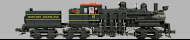
The Shay locomotive was the most widely used geared steam locomotive. The locomotives were built to the patents of Ephraim Shay, who has been credited with the popularization of the concept of a geared steam locomotive.
Shay locomotives had regular fire-tube boilers offset to the left to provide space for, and counterbalance the weight of, a two or three cylinder "motor," mounted vertically on the right with longitudinal drive shafts extending fore and aft from the crankshaft at wheel axle height. These shafts had universal joints and square sliding prismatic joints to accommodate the swiveling trucks. Each axle was driven by a separate bevel gear, with no side rods.
The strength of these engines is that all wheels, including, in some engines, those under the tender, are driven so that all the weight develops tractive effort. A high ratio of piston strokes to wheel revolutions allowed them to run at partial slip, where a conventional rod engine would spin its drive wheels and burn rails, losing all traction.
Shay locomotives were often known as sidewinders or stemwinders for their side-mounted drive shafts. Most were built for use in the United States, but many were exported, to about thirty countries, either by Lima, or after they had reached the end of their usefulness in the US.
Whistles:
CV163=0 SP 4449 Daylight
CV163=1 DRG&W 5 Chime
CV163=2 SOO Line 1003
CV163=3 DL&W 5 Chime
CV163=4 WM 6 Chime
CV163=5 Shay
CV163=6 Shay #2
Bells:
CV164=0 Pnuematic Bell 1
CV164=1 Pnuematic Bell 2
CV164=2 Pnuematic Bell 3
CV164=3 Steam Loco Rope Pull Bell
CV164=4 SOO Line 1003 Bell
CV164=5 DRG&W K27 Bell
CV164=6 Shay
Air Pumps
CV166=0 Cross Compound #1 Heisler
CV166=1 Cross Compound #2 K27 463
CV166=2 Single Stage #1 Z27
CV166=3 Single Stage #2 T16.1
The ESU Full Throttle Steam files now include a few new logic features for added operational realism while still leaving you in control of HOW YOU wish to run your locomotive.
Heavy Load: F9 by default.
Similar to the “Drive Hold” button on the Full Throttle Diesel files “Heavy Load” allows you to adjust the “Steam Cut Off Valve” at any speed allowing for a fierce full chuff or drifting with snifters and rod clanks. Heavy load can also act as an offset allowing speed adjustments when engaged if desired.
Coast: F4 by default.
Opposite of “Heavy Load” Coast allows for a negative offset allow drifting sounds of Rods and snifter valves at any speed. You again have the option to hold the speed to adjust the speed with this offset active. Even allowing for an increase of speed with no chuffs as if drifting downhill.
Independent brake: F10 by default
Identical to the Full Throttle Diesel files. This allows for the locomotive to stop more quickly than its regular momentum would normally carry it. This one is pretty self-explanatory – just press the brake and come to a stop! For additional options there are 3 Braking rates that can be set up for user preference.
Articulation: Sound Slot 2
By adding Sound Slot 2 to the F8 Function Mapping and enabling the "Secondary Trigger" (CV250) you can add a second set of drivers making any ESU Steam File articulated.
S0515 - Release Notes
===================================================
V-6 R-2:
===================================================
- updated independent brake
- updated boiler hiss
V-7 R-3:
===================================================
- updated independent brake
V-8 R-4:
===================================================
- updated steam chuffs
- updated rods and coasting
- updated boiler blowdown
- updated dynamo
- updated water refill
- updated function mapping Hide description more…
H0 N XL L M4
- Article numbers
- S0515
- Last change
- 2/19/2026
- Manufacturer
- ESU
Southern #630 Ks-1 2-8-0 H0 N XL L M4
- Article numbers:S0858
- Last change: 12/19/2025
- Manufacturer: ESU
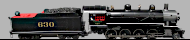
Southern Railway #630 was crafted by ALCO in 1904 under the Class K designation 2-8-0 consolidation. In 1917 it was significantly overhauled to include superheaters, piston valves, and Southern Valve Gear. It served the Southern Railway for the next 48 years primarily on the Asheville Division until retirement in June 1952.
#630 was then moved to Johnson City, TN where it found new life with the East Tennessee & Western North Carolina Railroad. It was numbered 207 and ran between Johnson City and Elizabethton. In 1967, the Southern Railway reacquired #630 in a trade to operate the locomotive as part of their steam program. It ran on the mainline once again until 1978.
The Tennessee Valley Railroad Museum (TVRM) then took #630 in under lease and it remained operational until 1989 and was retired. The locomotive was officially donated to the TVRM in 1999, restoration began in 2001 and completed in 2011. It continues to operate today at TVRM delighting passengers and railfans from all over the world.
We would like to send a Special Thanks to the TVRM for the opportunity to record the #630.
Whistles:
CV163 = 0 Southern Ks 1 Class #630
CV163 = 1 NKP #765
CV163 = 2 DRGW 5-Chime
CV163 = 3 SOO #1003
CV163 = 4 SP #4449
CV163 = 5 Hooter
CV163 = 6 CPR #2317
Bells:
CV164 = 0 Southern Ks 1 Class #630
CV164 = 1 #765 NKP Bell
CV164 = 2 Pneumatic Bell 2
CV164 = 3 Steam Loco Rope Bell
Brake Squeal:
CV165=0 Brake Squeal #1 Long
CV165=1 Brake Squeal #1 Short
CV165=2 Brake Squeal #2 Long
CV165=3 Brake Squeal #2 Short
CV165=4 Brake Squeal #3 Long
CV165=5 Brake Squeal #4Short
The ESU Full Throttle Steam files now include a few new logic features for added operational realism while still leaving you in control of HOW YOU wish to run your locomotive.
Heavy Load: F9 by default.
Similar to the “Drive Hold” button on the Full Throttle Diesel files “Heavy Load” allows you to adjust the “Steam Cut Off Valve” at any speed allowing for a fierce full chuff or drifting with snifters and rod clanks. Heavy load can also act as an offset allowing speed adjustments when engaged if desired.
Coast: F4 by default.
Opposite of “Heavy Load” Coast allows for a negative offset allow drifting sounds of Rods and snifter valves at any speed. You again have the option to hold the speed to adjust the speed with this offset active. Even allowing for an increase of speed with no chuffs as if drifting downhill.
Independent brake: F10 by default
Identical to the Full Throttle Diesel files. This allows for the locomotive to stop more quickly than its regular momentum would normally carry it. This one is pretty self-explanatory – just press the brake and come to a stop! For additional options there are 3 Braking rates that can be set up for user preference.
Articulation: Sound Slot 2
By adding Sound Slot 2 to the F8 Function Mapping and enabling the "Secondary Trigger" (CV250) you can add a second set of drivers making any ESU Steam File articulated.
S0858 - Release Notes
===============
V1-R1:
===============
- New Project Hide description more…
H0 N XL L M4
- Article numbers
- S0858
- Last change
- 12/19/2025
- Manufacturer
- ESU
License Agreement
1. GRANT OF LICENSE
1.1 ESU grants you a non-transferable, limited, non-exclusive right to use the Content solely for your own personal purposes. You may load the Content into RAM, as well as installation on a hard disk or other storage device on a single computer, hardware product or mobile device owned by you or under your control. The installation process may result in a copy of the Content residing on your computer, in which case, you may retain one (1) copy of the Content on your computer, provided that you retain all copyright and other proprietary notices on the copy and the copy is kept in your possession with the original.1.2 By using the Content, you shall not obtain any ownership, copyright, proprietary or other interest in or to the Content. The Content is licensed, not sold.
1.3 You are licensed to use, modify and combine the Sound Samples with sound samples provided by third parties, to create your own sound compositions which, subject to you complying with the terms of this Agreement, you are free to distribute as you wish provided that: (i) the Sound Samples have been mixed together to create an original work; (ii) individual Sound Samples are not used in isolation and (iii) the Sound Samples or derivatives are not used to create sound libraries for distribution to third parties.
2. PROHIBITED USES
Neither you, nor anyone at your direction, shall:2.1 use the Content, or any part of it, for any public performance, live broadcast or time delayed live broadcast where the Content is used unattended for commercial purposes without ESU' s prior written consent;
2.2 use the Content, or any part of it, in any competitive product;
2.3 sub-license, copy, reproduce, transmit, assign, rent, sell, lease, offer on a pay-per-play basis, distribute for money or any other consideration, or commercially exploit in any other manner or through any medium whatsoever or otherwise transfer in any way the Content or any part thereof;
2.4 manufacture and/or distribute for money or otherwise commercially exploit any product that incorporates any part of the Content. If you wish to use any part of the Content for manufacture, resale, sub-license or further distribution, you must contact ESU (and where relevant, its licensors) to enter into an appropriate agreement with ESU (and, where relevant, its licensors);
2.5 publish the results of any analysis or comparative evaluation of the Content or any part thereof without ESU' s prior written consent;
2.6 reverse engineer, recompile or disassemble any part of the Content except to the extent and in the circumstances expressly permitted by ESU and its licensors in writing or by law;
3. INTELLECTUAL PROPERTY RIGHTS
You acknowledge that all intellectual property rights in the Content are and shall remain vested in ESU and its licensors. You undertake not to interfere with or diminish, whether by act or omission, the rights, title and interest in the Content of ESU and its licensors. You may be held responsible by ESU and/or any of its licensors for any infringement of any intellectual property rights in the Content. For the avoidance of doubt, provided that you comply with the terms of this Agreement, ESU shall not claim ownership of the intellectual property rights in any compositions created by your use of the Content.4. TERM AND TERMINATION
This Agreement is effective from the first date you install the Content. The rights granted to you under this Agreement shall terminate if you fail to abide by its terms. Upon such termination you agree to destroy the Content including any Content stored on the hard disk of any computer under your control. You may terminate this Agreement at any time by destroying or erasing all your copies of the Content. Any termination of this Agreement (howsoever occasioned) shall not affect any accrued rights or liabilities of you or ESU nor shall it affect the coming into force or the continuance in force of the provisions of Clauses 2, 3, 5 and 6 and any provision hereof which is by implication intended to come into or continue in force on or after such termination.5. NO WARRANTIES
TO THE MAXIMUM EXTENT PERMITTED BY APPLICABLE LAW, ESU AND ITS LICENSORS PROVIDE THE CONTENT "AS IS" AND ESU EXCLUDES ON BEHALF OF ITSELF AND ITS LICENSORS, ALL CONDITIONS, TERMS, REPRESENTATIONS (OTHER THAN FRAUDULENT REPRESENTATIONS) AND WARRANTIES RELATING TO THE CONTENT, WHETHER IMPOSED BY STATUTE OR BY OPERATION OF LAW OR OTHERWISE, INCLUDING BUT NOT LIMITED TO, IMPLIED WARRANTIES OF SATISFACTORY QUALITY AND FITNESS FOR A PARTICULAR PURPOSE. NEITHER ESU NOR ITS LICENSORS WARRANT THAT THE OPERATION OF THE CONTENT WILL BE UNINTERRUPTED, ERROR FREE, VIRUS FREE OR MEET YOUR SPECIFIC REQUIREMENTS. YOU MAY HAVE OTHER RIGHTS THAT VARY FROM JURISDICTION TO JURISDICTION.6. ESU's LIABILITY
Neither ESU nor its licensors shall have any liability to you for any loss or damage caused directly or indirectly in connection with the Content, any part thereof or this Agreement, except to the extent that such liability cannot be lawfully excluded. In any case, neither ESU nor its licensors shall be liable for any loss of business, data, profits, savings, or any other special, incidental, consequential, indirect or economic loss whatsoever even if such losses were contemplated at the date of this Agreement.7. GENERAL
7.1 You acknowledge that damages alone might be insufficient remedy for any breach of the terms of this Agreement and that the remedies of injunction, specific performance or other equitable relief would be suitable remedies in the event of any breach or threatened breach of this Agreement.7.2 You may not assign or otherwise transfer all or any part of this Agreement or the rights granted to you hereunder.
7.3 ESU is not obliged to provide any maintenance, technical support or upgrades to you.
7.4 You agree to comply with all applicable import and export regulations and acknowledge that you have the responsibility for obtaining all necessary licenses to export, re-export, transfer or import the Content.
7.5 This Agreement constitutes the entire agreement between you and ESU with respect to the subject matter hereof and supersedes all prior agreements, arrangements and understandings between the parties and constitutes the entire agreement between the parties relating to such subject matter hereof. No addition to or modification of any provision of this Agreement shall be binding upon ESU and you unless made by a written instrument signed by a duly authorized representative of ESU and you.
7.6 No forbearance, delay or indulgence by either party in enforcing the provisions of this Agreement shall prejudice or restrict the rights of that party nor shall any waiver of its rights operate as a waiver of any subsequent breach and no right, power or remedy herein conferred upon or reserved for either party is exclusive of any other right, power or remedy available to that party and each such right, power or remedy shall be cumulative.
7.7 Notwithstanding that the whole or any part of any provision of this Agreement may prove to be illegal or unenforceable the other provisions of this Agreement and the remainder of the provision in question shall remain in full force and effect.
If you download the designated file, you agree to be legally bound by the license given above.