- Downloads
- Sounds
- projects.esu.eu
- LokSound 5 North American and Australian Sound files
#4501 SR Ms Class 2-8-2  H0 N XL L M4
- Article numbers:S0857
- Last change: 12/19/2025
- Manufacturer: ESU
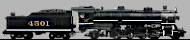
Southern Railway #4501 was built in October of 1911 in Philadelphia by Baldwin Locomotive Works and assigned to haul freight trains on many different divisions of the Southern Railway system. It operated in Tennessee, Virginia, Kentucky, and Indiana. The locomotive was retired in July 1948 in favor of dieselization and was sold to the Kentucky & Tennesee Railway to haul coal trains. Once the K&T diselized in 1964, it was purchased by a railfan who brought it to Chattanooga, TN. It was returned to main line excursion service on the Southern's steam program started by W. Graham Claytor Jr. in 1966 through the cooperation of the railfan. It operated in this capacity until 1985 when it was replaced with larger locomotives. It then operated again between 1990 and 1994 in mainline excursion service, being removed due to Norfolk Southern discontinuing the steam program.
#4501 continued to operate for the Tennessee Valley Railroad Museum (TVRM) in Chattanooga until 1998 when its boiler ticket certificate expired.
Restoration work begain on #4501 in 2012 folloing the restoration success of the TVRM's #630. The restoration work was completed in 2014 and the locomotive currently operates in tourist excursion service at the TVRM for longer trips to Summerville, GA and for special TVRM excursion trains.
We would like to send a Special Thanks to the TVRM for the opportunity to record the #4501.
Whistles:
CV163 = 0 SR MS Class #4501
CV163 = 1 NKP #765
CV163 = 2 DRGW 5-Chime
CV163 = 3 SOO #1003
CV163 = 4 SP #4449
CV163 = 5 CPR #2317
CV163 = 6 WM 6-Chime
Bells:
CV164 = 0 SR MS Class #4501
CV164 = 1 #765 NKP Bell
CV164 = 2 Pneumatic Bell 2
CV164 = 3 Steam Loco Rope Bell
CV164 = 4 Soo Line 1003 Bell Hide description more…
H0 N XL L M4
- Article numbers
- S0857
- Last change
- 12/19/2025
- Manufacturer
- ESU
#20 RGS T-19 Class 4-6-0 H0 N XL L M4
- Article numbers:S0856
- Last change: 12/19/2025
- Manufacturer: ESU

In 1899, the Florence and Cripple Creek Railroad (F&CC) acquired five T-19 Class locomotives for its Three-foot-network. Their heavy weight of 33 tons made these 2'C locomotives very powerful and they were used to pull passenger and freight trains. When the F&CC went bankrupt in 1916 due to severe flood damage, the locomotive, number 20, along with two sister locomotives, ended up with the Rio Grande Southern Railroad Company (RGS). In 1952, the RGS ceased operations and sold the locomotive to the Rocky Mountain Railroad Club, which later donated it to the Colorado Railroad Museum. It was restored to operating condition between late 2006 and mid-2020 with most of the work done by the Strasburg Rail Road in PA. It make it's official operational debut at the Colorado Railroad Museum on August 1, 2020.
#20 is in continual operation at the Colorado Railroad Museum for various events and has operated on other area narrow gauge railroads as a guest locomotive.
We would like to give Special Thanks to the Colorado Railroad Museum for their help in this project. To find out more about the museum and operations visit: https://coloradorailroadmuseum.org/
Recorded from RGS #20
This file can be used for many similar or smaller wheel arrangement locomotives for added variety. Hide description more…
H0 N XL L M4
- Article numbers
- S0856
- Last change
- 12/19/2025
- Manufacturer
- ESU
Hunslet Z27 Class 2-6-0 H0 N XL L M4
- Article numbers:S0740
- Last change: 4/23/2025
- Manufacturer: ESU

N.S.W.G.R. Class Z27 2705
**Please Note**
Responding to user feedback this file uses "Standard North American Function Mapping".
This is a template used for all steam files from ESU LLC.
While we realize most Australian Locomotives do not use Bells or Air Horns they are included in the mapping due to the template used. This is easily changable so the user can set the function mapping work as desired.
The Z27 class (formerly G.1204 class) was a class of steam locomotives built by Hunslet Engine Company for the New South Wales Government Railways of Australia. One example is preserved in #2705 at the New South Wales Rail Transport Museum.
Whistles:
CV163=0 UP 844 "Steamboat"
CV163=1 SP&S 3 Chime
CV163=2 Steamboat 3 Chime
CV163=3 SP 4449 Daylight
CV163=4 DRG&W 5 Chime
CV163=5 SOO Line 1003
CV163=6 DL&W 5 Chime
CV163=7 WM 6 Chime
CV163=8 Z27 Class 2705 - Default
Bells:
CV164=0 Pnuematic Bell 1
CV164=1 Pnuematic Bell 2
CV164=2 Pnuematic Bell 3
CV164=3 Steam Loco Rope Pull Bell - Default
CV164=4 SOO Line 1003 Bell
CV164=5 UP 844 Air Ringer Bell
CV164=6 SP 4449 Bell
CV164=7 DRG&W K27 Bell
Dynamos:
CV165=0 Soo Line 1003 Dynamo
CV165=1 K27 463 Dynamo
CV165=2 SPTriple Dynamo
CV165=3 UP Dual Dynamo
CV165=4 Z27 Dynamo - Default
CV165=5 T16.1 Dynamo
Air Pumps
CV166=0 Cross Compound #1 Soo Line 1003
CV166=1 Cross Compound #2 K27 463
CV166=2 Cross Compound #3 SP 4449
CV166=3 Cross Compound #4UP 844
CV166=4 Single Stage #1 Z27 - Default
CV166=5 Single Stage #2 T16.1
The ESU Full Throttle Steam files now include a few new logic features for added operational realism while still leaving you in control of HOW YOU wish to run your locomotive.
Heavy Load: F9 by default.
Similar to the “Drive Hold” button on the Full Throttle Diesel files “Heavy Load” allows you to adjust the “Steam Cut Off Valve” at any speed allowing for a fierce full chuff or drifting with snifters and rod clanks. Heavy load can also act as an offset allowing speed adjustments when engaged if desired.
Coast: F4 by default.
Opposite of “Heavy Load” Coast allows for a negative offset allow drifting sounds of Rods and snifter valves at any speed. You again have the option to hold the speed to adjust the speed with this offset active. Even allowing for an increase of speed with no chuffs as if drifting downhill.
Independent brake: F10 by default
Identical to the Full Throttle Diesel files. This allows for the locomotive to stop more quickly than its regular momentum would normally carry it. This one is pretty self-explanatory – just press the brake and come to a stop! For additional options there are 3 Braking rates that can be set up for user preference.
Articulation: Sound Slot 2
By adding Sound Slot 2 to the F8 Function Mapping and enabling the "Secondary Trigger" (CV250) you can add a second set of drivers making any ESU Steam File articulated.
Function Mappable Air Horn: F21 by default
Sound Slot 21.
Many Steam locomotives had a single chime airhorn equipped. Those modelling SP, MILW, and others can now have this feature and put it where they would like in the function mapping in addition to the whistle.
S0740 - Release Notes
===================================================
V-2 R-2:
===================================================
- updated independent brake
- updated boiler hiss
V-3 R-3:
===================================================
- updated steam chuff sound slot
V-4 R-4:
===================================================
- changed whistle sound slot 3 maximum sound slot speed to 128
V-5 R-5:
===================================================
- changed from USA project to Australia project Hide description more…
H0 N XL L M4
- Article numbers
- S0740
- Last change
- 4/23/2025
- Manufacturer
- ESU
N&W Class Y6B 2-8-8-2 H0 N XL L M4
- Article numbers:S0557
- Last change: 7/31/2024
- Manufacturer: ESU
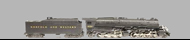
The Norfolk and Western Class Y6b was a class of 2-8-8-2 Mallets built between 1948-1952 with a total of 30 examples built for the Norfolk and Western Railway.
The Y6b was known as the workhorse of the Norfolk and Western Railway and the epitome of the compound mallet development design.
They were an improvement of the previous Y6a class with the only difference between the Y6as and the Y6bs was that the Y6bs were longer than the Y6as, had a larger firebox and had a greater tractive effort. With the Y6as only generating a tractive effort of 166,000 lbf (738.5 kN) and the Y6bs generating a tractive effort of 170,000 lbf (756.2 kN). The locomotives delivered 5,500 horsepower. The weight of a Y6b locomotive about 582,900 lbs with 522,850 lbs directly on the drivers.
When the Norfolk and Western Railway ceased their mainline steam operations in 1959, 50 of the Y6s were still running out serviceable miles in the coal fields waiting for the final order of diesels to replace them. The last of the Class Ys were retired in the summer of 1960.
Whistles:
CV163=0 N&W Y6B
CV163=1 N&W Hooter
CV163=2 N&W #475
CV163=3 N&W Boiler Crane
CV163=4 Hooter
CV163=5 PRR Flat Top Single-Chime Banshee Ed2
CV163=6 CN #89 Hooter
CV163=7 UP #4014 Hancock 3-Chime
CV163=8 UP #844
CV163=9 GSMR #1702
Bells:
CV164=0 #3 N&W Y6B Bell
CV164=1 #765 NKP Bell
CV164=2EV #11 Bell
Brake Squeal:
CV165=0 Brake Squeal #1 Long
CV165=1 Brake Squeal #1 Short
CV165=2 Brake Squeal #2 Long
CV165=3 Brake Squeal #2 Short
CV165=4 Brake Squeal #3 Long
CV165=5 Brake Squeal #4Short
Dynamos:
CV166=0 Soo Line 1003 Dynamo
CV166=1 K27 463 Dynamo
Air Pumps
CV167=0 Cross Compound #2 K27 463
CV167=1 Cross Compound slow #2 SP 4449
CV167=2 Westinghouse Single Stage 9" Air Pump HVSR #3
Reversers
CV168=0 Johnson Bar
CV168=1 Power Reverse
The ESU Full Throttle Steam files now include a few new logic features for added operational realism while still leaving you in control of HOW YOU wish to run your locomotive.
Heavy Load: F9 by default.
Similar to the “Drive Hold” button on the Full Throttle Diesel files “Heavy Load” allows you to adjust the “Steam Cut Off Valve” at any speed allowing for a fierce full chuff or drifting with snifters and rod clanks. Heavy load can also act as an offset allowing speed adjustments when engaged if desired.
Coast: F4 by default.
Opposite of “Heavy Load” Coast allows for a negative offset allow drifting sounds of Rods and snifter valves at any speed. You again have the option to hold the speed to adjust the speed with this offset active. Even allowing for an increase of speed with no chuffs as if drifting downhill.
Independent brake: F10 by default
Identical to the Full Throttle Diesel files. This allows for the locomotive to stop more quickly than its regular momentum would normally carry it. This one is pretty self-explanatory – just press the brake and come to a stop! For additional options there are 3 Braking rates that can be set up for user preference.
Articulation: Sound Slot 2
By adding Sound Slot 2 to the F8 Function Mapping and enabling the "Secondary Trigger" (CV250) you can add a second set of drivers making any ESU Steam File articulated.
Function Mappable Air Horn: F21 by default
Sound Slot 21.
Many Steam locomotives had a single chime airhorn equipped. Those modelling SP, MILW, and others can now have this feature and put it where they would like in the function mapping in addition to the whistle.
S0557 - Release Notes
===================================================
V-1 R-1:
===================================================
- new project
V-2 R-2:
===================================================
- steam chuff secondary trigger distance adustment to 10 Hide description more…
H0 N XL L M4
- Article numbers
- S0557
- Last change
- 7/31/2024
- Manufacturer
- ESU
#108 BHCR BLW 2-6-6-2T H0 N XL L M4
- Article numbers:S0816
- Last change: 7/31/2024
- Manufacturer: ESU

Recorded from Black Hills Central Rrailroad #108
We would like to give a special thanks to the BHCR for their help in this project. To find out more about their operation or to book a ride please go to: https://www.1880train.com/
This is a 2-6-6-2T articulated Mallet that was built by The Baldwin Locomotive Works in 1926.
Pacific Northwest steam historian Martin Hansen offers this perspective: “This 1926 Baldwin 2-6-6-2T spent her entire working career in logging service in the Pacific Northwest. Originally ordered as a coal burner for the Potlach Lumber Co. of Potlach, Idaho where she was No. 24, she later converted to burn oil when she was purchased by Weyerhaeuser Timber Co. for use on that company’s Headquarters Operation out of Longview, Wash., where she became No. 108. She was one of only three Baldwin logging Mallets to be built with full saddle tanks over her boiler, rather than the more common split side tanks found on other tank Mallets of the day.”
The restoration on 108 was completed in 2020 and ran together with the ,110 another 2-6-6-2T, on the Blck Hills Central Railroads first double header.
True Mallet Locomotives are compound locomotives utilizing the steam multiple times. Because the exhaust from the first cylinders (high pressure) gets reused by the next set of cylinders (low pressure) the "double chuff" often associated with articulated locomotives is not really present. They are heard in the more common "simple" type articulated locomotives which are easier to mantain.
While recorded from a 2-6-6-2T this file can be used for simiar Compound Mallet type locomotives.
Whistles:
CV163=0 CB&Q 5 Chime *
CV163=1 DRG&W 5-Chime
CV163=2 Soo #1003
CV163=3 SP #4449
CV163=4 UP #844*
CV163=5 WM 3-Chime *
CV163=6 WM 6-Chime
CV163=7 SP&S 3-Chime *
CV163=8 DL&W #261 5-Chime
Bells:
CV164=0 BHCR #108 Bell *
CV164=1 Pnuematic Bell 2
CV164=2 Rope Pull Bell
CV164=3 SOO Line 1003 Bell
CV164=4 DRG&W K27 Bell
Brake Squeal:
CV165=0 Brake Squeal #1 Long
CV165=1 Brake Squeal #1 Short
CV165=2 Brake Squeal #2 Long
CV165=3 Brake Squeal #2 Short
CV165=4 Brake Squeal #3 Long
CV165=5 Brake Squeal #4Short
Dynamos:
CV166=0 Soo Line 1003 Dynamo
CV166=1 K27 463 Dynamo
CV166=2 T16.1 Dynamo
Air Pumps
CV167=0 Cross Compound #1 Soo Line 1003
CV167=1 Cross Compound #2 K27 463
CV167=2 Single Stage #1 Z27
CV167=3 Single Stage slow Air Pump #1 Z27
CV167=4 BHCR Slow Air Pump *
Reversers
CV168=0 Johnson Bar
CV168=1 Power Reverse
The ESU Full Throttle Steam files now include a few new logic features for added operational realism while still leaving you in control of HOW YOU wish to run your locomotive.
Heavy Load: F9 by default.
Similar to the “Drive Hold” button on the Full Throttle Diesel files “Heavy Load” allows you to adjust the “Steam Cut Off Valve” at any speed allowing for a fierce full chuff or drifting with snifters and rod clanks. Heavy load can also act as an offset allowing speed adjustments when engaged if desired.
Coast: F4 by default.
Opposite of “Heavy Load” Coast allows for a negative offset allow drifting sounds of Rods and snifter valves at any speed. You again have the option to hold the speed to adjust the speed with this offset active. Even allowing for an increase of speed with no chuffs as if drifting downhill.
Independent brake: F10 by default
Identical to the Full Throttle Diesel files. This allows for the locomotive to stop more quickly than its regular momentum would normally carry it. This one is pretty self-explanatory – just press the brake and come to a stop! For additional options there are 3 Braking rates that can be set up for user preference.
Articulation: Sound Slot 2
By adding Sound Slot 2 to the F8 Function Mapping and enabling the "Secondary Trigger" (CV250) you can add a second set of drivers making any ESU Steam File articulated.
Function Mappable Air Horn: F21 by default
Sound Slot 21.
Many Steam locomotives had a single chime airhorn equipped. Those modelling SP, MILW, and others can now have this feature and put it where they would like in the function mapping in addition to the whistle.
S0816 - Release Notes
===================================================
V-4 R-4:
===================================================
- updated independent brake
- updated boiler hiss
- updated steam chuff sound slot
V-5 R-5:
===================================================
- changed whistle sound slot 3 maximum sound slot speed to 128
V-6 R-6:
===================================================
- steam chuff secondary trigger distance adustment to 10 Hide description more…
H0 N XL L M4
- Article numbers
- S0816
- Last change
- 7/31/2024
- Manufacturer
- ESU
#110 BHCR BLW 2-6-6-2T H0 N XL L M4
- Article numbers:S0793
- Last change: 7/31/2024
- Manufacturer: ESU
Recorded from Black Hills Central Rrailroad #110
We would like to give a special thanks to the BHCR for their help in this project. To find out more about their operation or to book a ride please go to: https://www.1880train.com/
This is a 2-6-6-2T articulated Mallet that was built by The Baldwin Locomotive Works in 1928 for the Weyerhaeuser Timber Company of Vail, WA. Its next stop was The Rayonier Lumber Company where it received a tender from Rayonier #101 and was retired in 1968. This engine was later displayed at the Wasatch Mountain Railway in Heber City, UT, and then sold to the Nevada State Railway Museum. The #110 was sold to The BHC in 1999 and was trucked from Nevada to South Dakota on four semi-trailers. Restoration on this engine was completed in the spring of 2001.
True Mallet Locomotives are compound locomotives utilizing the steam multiple times. Because the exhaust from the first cylinders (high pressure) gets reused by the next set of cylinders (low pressure) the "double chuff" often associated with articulated locomotives is not really present.
While recorded from a 2-6-6-2T this file can be used for simiar Mallet type locomotives.
Whistles:
CV163=0 BHCR #110 CB&Q 5 Chime *
CV163=1 DRG&W 5-Chime
CV163=2 Soo #1003
CV163=3 SP #4449
CV163=4 UP #844*
CV163=5 WM 3-Chime *
CV163=6 WM 6-Chime
CV163=7 SP&S 3-Chime *
CV163=8 DL&W #261 5-Chime
Bells:
CV164=0 BHCR #110 Bell *
CV164=1 Pnuematic Bell 2
CV164=2 Rope Pull Bell
CV164=3 SOO Line 1003 Bell
CV164=4 DRG&W K27 Bell
Brake Squeal:
CV165=0 Brake Squeal #1 Long
CV165=1 Brake Squeal #1 Short
CV165=2 Brake Squeal #2 Long
CV165=3 Brake Squeal #2 Short
CV165=4 Brake Squeal #3 Long
CV165=5 Brake Squeal #4Short
Dynamos:
CV166=0 Soo Line 1003 Dynamo
CV166=1 K27 463 Dynamo
CV166=2 T16.1 Dynamo
Air Pumps
CV167=0 Cross Compound #1 Soo Line 1003
CV167=1 Cross Compound #2 K27 463
CV167=2 Single Stage #1 Z27
CV167=3 Single Stage slow Air Pump #1 Z27
CV167=4 BHCR Slow Air Pump *
The ESU Full Throttle Steam files now include a few new logic features for added operational realism while still leaving you in control of HOW YOU wish to run your locomotive.
Heavy Load: F9 by default.
Similar to the “Drive Hold” button on the Full Throttle Diesel files “Heavy Load” allows you to adjust the “Steam Cut Off Valve” at any speed allowing for a fierce full chuff or drifting with snifters and rod clanks. Heavy load can also act as an offset allowing speed adjustments when engaged if desired.
Coast: F4 by default.
Opposite of “Heavy Load” Coast allows for a negative offset allow drifting sounds of Rods and snifter valves at any speed. You again have the option to hold the speed to adjust the speed with this offset active. Even allowing for an increase of speed with no chuffs as if drifting downhill.
Independent brake: F10 by default
Identical to the Full Throttle Diesel files. This allows for the locomotive to stop more quickly than its regular momentum would normally carry it. This one is pretty self-explanatory – just press the brake and come to a stop! For additional options there are 3 Braking rates that can be set up for user preference.
Articulation: Sound Slot 2
By adding Sound Slot 2 to the F8 Function Mapping and enabling the "Secondary Trigger" (CV250) you can add a second set of drivers making any ESU Steam File articulated.
Function Mappable Air Horn: F21 by default
Sound Slot 21.
Many Steam locomotives had a single chime airhorn equipped. Those modelling SP, MILW, and others can now have this feature and put it where they would like in the function mapping in addition to the whistle.
S0793 - Release Notes
===================================================
V-4 R-3:
===================================================
- updated independent brake
- updated boiler hiss
- updated steam chuff sound slot
V-5 R-4:
===================================================
- changed whistle sound slot 3 maximum sound slot speed to 128
V-6 R-5:
===================================================
- steam chuff secondary trigger distance adustment to 10 Hide description more…
H0 N XL L M4
- Article numbers
- S0793
- Last change
- 7/31/2024
- Manufacturer
- ESU
#488 C&T BLW 2-8-2 H0 N XL L M4
- Article numbers:S0803
- Last change: 5/24/2024
- Manufacturer: ESU
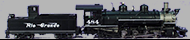
Recorded from Cumbres and Toltec #488
We would like to give a special thanks to the Cubres and Toltec Scenic Railroad for their help in this project. To find out more about their operation or to book a ride please go to: https://cumbrestoltec.com/
The Denver and Rio Grande Western K-36 class are ten 3 ft (914 mm) narrow gauge 2-8-2 "Mikado" type steam locomotives built for the Denver and Rio Grande Western Railroad (D&RGW) by Baldwin Locomotive Works. They were shipped to the Rio Grande in 1925 and were first used along the Monarch Branch and Marshall Pass, but were later sent to the Third Division out of Alamosa. Of the original ten, four are owned by the Durango and Silverton Narrow Gauge Railroad (D&SNG) and five by the Cumbres and Toltec Scenic Railroad (C&TS). Number 485 fell into the turntable pit at Salida and was scrapped in Pueblo in 1955, with many parts being saved.
The locomotives are of outside-frame design, with the driving wheels placed between the two chassis frames which support the boiler, but with the cylinders, driving rods, counterweights and valve gear on the outside. This general arrangement is shared with the earlier K-27, K-28 and later K-37 Mikado engines.
Whistles:
CV163=0 DRGW 488 Whistle
CV163=1 DRGW #491
CV163=2 DRGW #484
CV163=3 DRGW #463
CV163=4 DRGW 5-Chime
CV163=5 DRGW #346
CV163=6 DRGW #318
CV163=7 ATSF #2926 6-Chime
CV163=8 WP #165
Bells:
CV164=0 D&RGW K27 Bell
CV164=1 Steam Loco Rope Bell
CV164=2 Soo Line 1003 Bell
Brake Squeal:
CV165=0 Brake Squeal #1 Long
CV165=1 Brake Squeal #1 Short
CV165=2 Brake Squeal #2 Long
CV165=3 Brake Squeal #2 Short
CV165=4 Brake Squeal #3 Long
CV165=5 Brake Squeal #4Short
Dynamos:
CV166=0 Soo Line 1003 Dynamo
CV166=1 K27 463 Dynamo
Air Pumps
CV167=0 D&RGW #484 Pump
CV167=1 Cross Compound #2 K27 463
CV167=2 Cross Compound #3 SP 4449
Reversers
CV168=0 Johnson Bar
CV168=1 Power Reverse
The ESU Full Throttle Steam files now include a few new logic features for added operational realism while still leaving you in control of HOW YOU wish to run your locomotive.
Heavy Load: F9 by default.
Similar to the “Drive Hold” button on the Full Throttle Diesel files “Heavy Load” allows you to adjust the “Steam Cut Off Valve” at any speed allowing for a fierce full chuff or drifting with snifters and rod clanks. Heavy load can also act as an offset allowing speed adjustments when engaged if desired.
Coast: F4 by default.
Opposite of “Heavy Load” Coast allows for a negative offset allow drifting sounds of Rods and snifter valves at any speed. You again have the option to hold the speed to adjust the speed with this offset active. Even allowing for an increase of speed with no chuffs as if drifting downhill.
Independent brake: F10 by default
Identical to the Full Throttle Diesel files. This allows for the locomotive to stop more quickly than its regular momentum would normally carry it. This one is pretty self-explanatory – just press the brake and come to a stop! For additional options there are 3 Braking rates that can be set up for user preference.
Articulation: Sound Slot 2
By adding Sound Slot 2 to the F8 Function Mapping and enabling the "Secondary Trigger" (CV250) you can add a second set of drivers making any ESU Steam File articulated.
Function Mappable Air Horn: F21 by default
Sound Slot 21.
Many Steam locomotives had a single chime airhorn equipped. Those modelling SP, MILW, and others can now have this feature and put it where they would like in the function mapping in addition to the whistle.
S0803 - Release Notes
===================================================
V-1 R-1:
===================================================
- new project Hide description more…
H0 N XL L M4
- Article numbers
- S0803
- Last change
- 5/24/2024
- Manufacturer
- ESU
#7470 CN GTW 0-6-0 H0 N XL L M4
- Article numbers:S0801
- Last change: 5/7/2024
- Manufacturer: ESU

Canadian National No. 7470 is a O-18a class 0-6-0 "Switcher" type steam locomotive that currently works on the Conway Scenic Railroad in North Conway, New Hampshire.
7470 was built by the Grand Trunk Railway Point St. Charles Shops at Montreal, Quebec in June 1921. The Grand Trunk classified the switcher as F9 Class and numbered it as Grand Trunk Railway No. 1795. It soon became and renumbered as Canadian National No. 7470 when the Canadian National Railway absorbed the Grand Trunk in 1923, they reclassified it as a Class 0-18-a.
7470 was originally spared scrapping, until it was saved by being sold to the Canada Dominion Sugar, where it spent some additional years as a switcher. Later, in May 1963, it was purchased by the Ontario government for a transportation museum in Canada, but that never came to fruition.
7470 was acquired in 1968 by Dwight Smith, and in 1974 joined the Conway Scenic Railroad and renumbered as No. 47. It was renumbered back to No. 7470 in the mid 1980's. Today, No. 7470 is used primarily to power the Conway-bound Valley Trains during the autumn seasons, as well as special excursions such as Steam in the Snow. It has also pulled the Notch Train on special occasions, recently as of 2011.
No. 7470 made its last run on January 15, 2015 of its Steam in the Snow event and was out of service from 2015 to 2019 for its 15-year major federally mandated inspection and overhaul. No. 7470 returned to active service again on June 1, 2019 and made its first test runs under its own power for the first time since January 2015.
Whistles:
CV163=0 CN #7470 6-Chime
CV163=1 B&M Peanut 5-Chime
CV163=2 CN 4-Chime
CV163=3 CN #89 Hooter
CV163=4 CPR
CV163=5 CPR #2317
CV163=6 B&O 3-Chime
CV163=7 Hooter
CV163=8 Robert Swanson 6-Chime
Bells:
CV164=0 #7470 CN Bell
CV164=1 Pnuematic Bell 2
CV164=2 Rope Pull Bell
CV164=3 SOO Line 1003 Bell
CV164=4 DRG&W K27 Bell
Brake Squeal:
CV165=0 Brake Squeal #1 Long
CV165=1 Brake Squeal #1 Short
CV165=2 Brake Squeal #2 Long
CV165=3 Brake Squeal #2 Short
CV165=4 Brake Squeal #3 Long
CV165=5 Brake Squeal #4Short
Dynamos:
CV166=0 Soo Line 1003 Dynamo
CV166=1 K27 463 Dynamo
CV166=2 T16.1 Dynamo
Air Pumps
CV167=0 Cross Compound #1 Soo Line 1003
CV167=1 Cross Compound #2 K27 463
CV167=2 Single Stage #1 Z27
CV167=3 Air Pump CN #7470
Reversers
CV168=0 Johnson Bar
CV168=1 Power Reverse
The ESU Full Throttle Steam files now include a few new logic features for added operational realism while still leaving you in control of HOW YOU wish to run your locomotive.
Heavy Load: F9 by default.
Similar to the “Drive Hold” button on the Full Throttle Diesel files “Heavy Load” allows you to adjust the “Steam Cut Off Valve” at any speed allowing for a fierce full chuff or drifting with snifters and rod clanks. Heavy load can also act as an offset allowing speed adjustments when engaged if desired.
Coast: F4 by default.
Opposite of “Heavy Load” Coast allows for a negative offset allow drifting sounds of Rods and snifter valves at any speed. You again have the option to hold the speed to adjust the speed with this offset active. Even allowing for an increase of speed with no chuffs as if drifting downhill.
Independent brake: F10 by default
Identical to the Full Throttle Diesel files. This allows for the locomotive to stop more quickly than its regular momentum would normally carry it. This one is pretty self-explanatory – just press the brake and come to a stop! For additional options there are 3 Braking rates that can be set up for user preference.
Articulation: Sound Slot 2
By adding Sound Slot 2 to the F8 Function Mapping and enabling the "Secondary Trigger" (CV250) you can add a second set of drivers making any ESU Steam File articulated.
Function Mappable Air Horn: F21 by default
Sound Slot 21.
Many Steam locomotives had a single chime airhorn equipped. Those modelling SP, MILW, and others can now have this feature and put it where they would like in the function mapping in addition to the whistle.
S0801 - Release Notes
===================================================
V-1 R-1:
===================================================
- new project Hide description more…
H0 N XL L M4
- Article numbers
- S0801
- Last change
- 5/7/2024
- Manufacturer
- ESU
#491 D&RGW BLW 2-8-2 K-37 H0 N XL L M4
- Article numbers:S0840
- Last change: 4/22/2024
- Manufacturer: ESU

The Denver and Rio Grande Western K-37 is a class of 2-8-2 "Mikado" type narrow-gauge steam locomotives built by the D&RGW Burnham Shops. They were made by converting 10 standard gauge C-41 Consolidation locomotives onto new narrow gauge frames.
The locomotives are of outside-frame design, with the driving wheels placed between the two chassis frames which support the boiler, but with the cylinders, driving rods, counterweights and valve gear on the outside. This general arrangement is shared with the earlier K-27, K-28 and K-36 Mikado type engines.
The locos worked out of Salida, Colorado to Gunnison, Colorado and up the Crested Butte Branch as well as the Monarch Branch. The locos also worked out of Alamosa, Colorado to Antonito over Cumbres Pass to Chama and on to Durango and the Farmington branch. Like the K-36s the locos were not permitted west of Gunnison or on the Silverton branch. However, the Silverton branch has since been upgraded to handle K-36s and K-37s. Three of the K-37s, Nos. 491, 493 and 499, were equipped with steam heat and signal lines so they could haul passenger trains like the San Juan Express and Shavano.
Of the eight preserved K-37s, locomotive #497 has operated on both the Durango and Silverton Narrow Gauge Railroad (D&SNG) in Durango, Colorado from 1984 to 1991 and on the Cumbres and Toltec Scenic Railroad (C&TSRR) in Chama, New Mexico from 1992 to 2002. In late 2002, #497 was taken out of service, and as of 2021, it currently sits inside the Chama roundhouse awaiting a future overhaul. In August 2014, locomotive #491 was restored to operating condition at the Colorado Railroad Museum (C.R.R.M.) and operated for the first time in public on Saturday, September 13, 2014 at the annual Thomas the Tank Engine event. A ticketed "roll out" was hosted on August 29, 2014. On May 4, 2016, the D&SNG, in cooperation with the Colorado Railroad Museum, transported locomotive #493 to Durango after resting in Silverton for almost 20 years with the plan of having the C.R.R.M. transport it to Golden, Colorado and have it restored as well. However, after plans with the C.R.R.M. fell through, the D&SNG decided to undertake the restoration of #493 themselves. In the restoration process of #493 however, the locomotive was converted to oil-firing, making it the first former D&RGW 2-8-2 to burn oil instead of coal, the next one being K-28 class #473. On January 24, 2020, #493 moved under its own power for the first time in over 50 years, making it the first D&RGW K-37 class since #497 to run on the D&SNG. #493 then ran its first revenue run on the D&SNG on February 14, 2020. As of February 16, 2022, it was announced that engines 492 and 497 are being evaluated to see which is more fit for restoration. It is unclear if the chosen locomotive will be converted to burn oil.
Recorded from C.R.R.M #491
While recorded from a K-37 2-8-2, this file can be used for smaller locomotives in many wheel arrangments.
Whistles:
CV163=0 C&TSR 463
CV163=1 DRGW 484
CV163=2 DRGW 488
CV163=3 DRGW 5-Chime 1
CV163=4 DRGW 5-Chime 2
CV163=5 DRGW 346
CV163=6 DRGW 484 #2
CV163=7 DRGW 488 #2
CV163=8 DRGW 491
CV163=9 DRGW 318
Bells:
CV164=0 DRGW 491 Bell
CV164=1 DRGW 346 Bell
CV164=2 DRGW 463 Bell
Brake Squeal:
CV165=0 Brake Squeal #1 Long
CV165=1 Brake Squeal #1 Short
CV165=2 Brake Squeal #2 Long
CV165=3 Brake Squeal #2 Short
Dynamos:
CV166=0 DRGW #191 Dynamo
CV166=1 K27 463 Dynamo
Air Pumps
CV167=0 Air Pump DRGW #491
Reversers
CV168=0 Johnson Bar
CV168=1 Power Reverse
The ESU Full Throttle Steam files now include a few new logic features for added operational realism while still leaving you in control of HOW YOU wish to run your locomotive.
Heavy Load: F9 by default.
Similar to the “Drive Hold” button on the Full Throttle Diesel files “Heavy Load” allows you to adjust the “Steam Cut Off Valve” at any speed allowing for a fierce full chuff or drifting with snifters and rod clanks. Heavy load can also act as an offset allowing speed adjustments when engaged if desired.
Coast: F4 by default.
Opposite of “Heavy Load” Coast allows for a negative offset allow drifting sounds of Rods and snifter valves at any speed. You again have the option to hold the speed to adjust the speed with this offset active. Even allowing for an increase of speed with no chuffs as if drifting downhill.
Independent brake: F10 by default
Identical to the Full Throttle Diesel files. This allows for the locomotive to stop more quickly than its regular momentum would normally carry it. This one is pretty self-explanatory – just press the brake and come to a stop! For additional options there are 3 Braking rates that can be set up for user preference.
Articulation: Sound Slot 2
By adding Sound Slot 2 to the F8 Function Mapping and enabling the "Secondary Trigger" (CV250) you can add a second set of drivers making any ESU Steam File articulated.
S0840 - Release Notes
===================================================
V-2 R-2:
===================================================
- updated independent brake
- updated boiler hiss
- updated steam chuff sound slot
V-3 R-3:
===================================================
- fixed wrong sound slot 1 name Hide description more…
H0 N XL L M4
- Article numbers
- S0840
- Last change
- 4/22/2024
- Manufacturer
- ESU
#734 WM BLW 2-8-0 H0 N XL L M4
- Article numbers:S0517
- Last change: 4/22/2024
- Manufacturer: ESU

Western Maryland Scenic Railroad No. 734, also known as Mountain Thunder, is an SC-1 class 2-8-0 “Consolidation” type steam locomotive originally built by the Baldwin Locomotive Works in 1916 for the Lake Superior and Ishpeming Railroad (LS&I) as No. 18. It was renumbered to 34 in 1925. No. 34 was used to pull heavy iron ore trains for the LS&I, until it was retired in 1961. The locomotive was subsequently sold to the Marquette and Huron Mountain Railroad, where it was stored in a sideline alongside other LS&I steam locomotives. In 1971, No. 34 was sold to the Illinois Railway Museum for static display.
In 1992, No. 34 was acquired by the Western Maryland Scenic Railroad (WMSR), who renumbered it to 734 and cosmetically altered it to resemble a Western Maryland (WM) 2-8-0. For the next twenty-three years, No. 734 pulled the WMSR’s tourist excursion trains and photo charter trains between Cumberland and Frostburg, Maryland. Since 2016, No. 734 has remained out of service for a Federal Railroad Administration (FRA)-mandated rebuild, and the WMSR set the restoration of former Chesapeake and Ohio (C&O) 2-6-6-2 No. 1309 as a higher priority. As of 2024, the WMSR is raising funds to perform an extensive rebuild on No. 734.
Whistles:
CV163=0 WM 3-Chime
CV163=1 WM #1309
CV163=2 B&O 3-Chime
CV163=3 DRGW #491
CV163=4 Hooter
CV163=5 PRR 3-Chime
CV163=6 WM 6-Chime
Bells:
CV164=0 #734 WM Bell 1
CV164=1 Pnuematic Bell 2
CV164=2 Rope Pull Bell
CV164=3 SOO Line 1003 Bell
CV164=4 DRG&W K27 Bell
Brake Squeal:
CV165=0 Brake Squeal #1 Long
CV165=1 Brake Squeal #1 Short
CV165=2 Brake Squeal #2 Long
CV165=3 Brake Squeal #2 Short
CV165=4 Brake Squeal #3 Long
CV165=5 Brake Squeal #4Short
Dynamos:
CV166=0 WM #734 Dynamo
CV166=1 T16.1 Dynamo
Air Pumps
CV167=0 Cross Compound #1 Soo Line 1003
CV167=1 Cross Compound #2 K27 463
CV167=2 Single Stage #1 Z27
CV167=3 Air Pump WM #734
Reversers
CV168=0 Johnson Bar
CV168=1 Power Reverse
The ESU Full Throttle Steam files now include a few new logic features for added operational realism while still leaving you in control of HOW YOU wish to run your locomotive.
Heavy Load: F9 by default.
Similar to the “Drive Hold” button on the Full Throttle Diesel files “Heavy Load” allows you to adjust the “Steam Cut Off Valve” at any speed allowing for a fierce full chuff or drifting with snifters and rod clanks. Heavy load can also act as an offset allowing speed adjustments when engaged if desired.
Coast: F4 by default.
Opposite of “Heavy Load” Coast allows for a negative offset allow drifting sounds of Rods and snifter valves at any speed. You again have the option to hold the speed to adjust the speed with this offset active. Even allowing for an increase of speed with no chuffs as if drifting downhill.
Independent brake: F10 by default
Identical to the Full Throttle Diesel files. This allows for the locomotive to stop more quickly than its regular momentum would normally carry it. This one is pretty self-explanatory – just press the brake and come to a stop! For additional options there are 3 Braking rates that can be set up for user preference.
Articulation: Sound Slot 2
By adding Sound Slot 2 to the F8 Function Mapping and enabling the "Secondary Trigger" (CV250) you can add a second set of drivers making any ESU Steam File articulated.
Function Mappable Air Horn: F21 by default
Sound Slot 21.
Many Steam locomotives had a single chime airhorn equipped. Those modelling SP, MILW, and others can now have this feature and put it where they would like in the function mapping in addition to the whistle.
S0517 - Release Notes
===================================================
V-1 R-1:
===================================================
- new project Hide description more…
H0 N XL L M4
- Article numbers
- S0517
- Last change
- 4/22/2024
- Manufacturer
- ESU
License Agreement
1. GRANT OF LICENSE
1.1 ESU grants you a non-transferable, limited, non-exclusive right to use the Content solely for your own personal purposes. You may load the Content into RAM, as well as installation on a hard disk or other storage device on a single computer, hardware product or mobile device owned by you or under your control. The installation process may result in a copy of the Content residing on your computer, in which case, you may retain one (1) copy of the Content on your computer, provided that you retain all copyright and other proprietary notices on the copy and the copy is kept in your possession with the original.1.2 By using the Content, you shall not obtain any ownership, copyright, proprietary or other interest in or to the Content. The Content is licensed, not sold.
1.3 You are licensed to use, modify and combine the Sound Samples with sound samples provided by third parties, to create your own sound compositions which, subject to you complying with the terms of this Agreement, you are free to distribute as you wish provided that: (i) the Sound Samples have been mixed together to create an original work; (ii) individual Sound Samples are not used in isolation and (iii) the Sound Samples or derivatives are not used to create sound libraries for distribution to third parties.
2. PROHIBITED USES
Neither you, nor anyone at your direction, shall:2.1 use the Content, or any part of it, for any public performance, live broadcast or time delayed live broadcast where the Content is used unattended for commercial purposes without ESU' s prior written consent;
2.2 use the Content, or any part of it, in any competitive product;
2.3 sub-license, copy, reproduce, transmit, assign, rent, sell, lease, offer on a pay-per-play basis, distribute for money or any other consideration, or commercially exploit in any other manner or through any medium whatsoever or otherwise transfer in any way the Content or any part thereof;
2.4 manufacture and/or distribute for money or otherwise commercially exploit any product that incorporates any part of the Content. If you wish to use any part of the Content for manufacture, resale, sub-license or further distribution, you must contact ESU (and where relevant, its licensors) to enter into an appropriate agreement with ESU (and, where relevant, its licensors);
2.5 publish the results of any analysis or comparative evaluation of the Content or any part thereof without ESU' s prior written consent;
2.6 reverse engineer, recompile or disassemble any part of the Content except to the extent and in the circumstances expressly permitted by ESU and its licensors in writing or by law;
3. INTELLECTUAL PROPERTY RIGHTS
You acknowledge that all intellectual property rights in the Content are and shall remain vested in ESU and its licensors. You undertake not to interfere with or diminish, whether by act or omission, the rights, title and interest in the Content of ESU and its licensors. You may be held responsible by ESU and/or any of its licensors for any infringement of any intellectual property rights in the Content. For the avoidance of doubt, provided that you comply with the terms of this Agreement, ESU shall not claim ownership of the intellectual property rights in any compositions created by your use of the Content.4. TERM AND TERMINATION
This Agreement is effective from the first date you install the Content. The rights granted to you under this Agreement shall terminate if you fail to abide by its terms. Upon such termination you agree to destroy the Content including any Content stored on the hard disk of any computer under your control. You may terminate this Agreement at any time by destroying or erasing all your copies of the Content. Any termination of this Agreement (howsoever occasioned) shall not affect any accrued rights or liabilities of you or ESU nor shall it affect the coming into force or the continuance in force of the provisions of Clauses 2, 3, 5 and 6 and any provision hereof which is by implication intended to come into or continue in force on or after such termination.5. NO WARRANTIES
TO THE MAXIMUM EXTENT PERMITTED BY APPLICABLE LAW, ESU AND ITS LICENSORS PROVIDE THE CONTENT "AS IS" AND ESU EXCLUDES ON BEHALF OF ITSELF AND ITS LICENSORS, ALL CONDITIONS, TERMS, REPRESENTATIONS (OTHER THAN FRAUDULENT REPRESENTATIONS) AND WARRANTIES RELATING TO THE CONTENT, WHETHER IMPOSED BY STATUTE OR BY OPERATION OF LAW OR OTHERWISE, INCLUDING BUT NOT LIMITED TO, IMPLIED WARRANTIES OF SATISFACTORY QUALITY AND FITNESS FOR A PARTICULAR PURPOSE. NEITHER ESU NOR ITS LICENSORS WARRANT THAT THE OPERATION OF THE CONTENT WILL BE UNINTERRUPTED, ERROR FREE, VIRUS FREE OR MEET YOUR SPECIFIC REQUIREMENTS. YOU MAY HAVE OTHER RIGHTS THAT VARY FROM JURISDICTION TO JURISDICTION.6. ESU's LIABILITY
Neither ESU nor its licensors shall have any liability to you for any loss or damage caused directly or indirectly in connection with the Content, any part thereof or this Agreement, except to the extent that such liability cannot be lawfully excluded. In any case, neither ESU nor its licensors shall be liable for any loss of business, data, profits, savings, or any other special, incidental, consequential, indirect or economic loss whatsoever even if such losses were contemplated at the date of this Agreement.7. GENERAL
7.1 You acknowledge that damages alone might be insufficient remedy for any breach of the terms of this Agreement and that the remedies of injunction, specific performance or other equitable relief would be suitable remedies in the event of any breach or threatened breach of this Agreement.7.2 You may not assign or otherwise transfer all or any part of this Agreement or the rights granted to you hereunder.
7.3 ESU is not obliged to provide any maintenance, technical support or upgrades to you.
7.4 You agree to comply with all applicable import and export regulations and acknowledge that you have the responsibility for obtaining all necessary licenses to export, re-export, transfer or import the Content.
7.5 This Agreement constitutes the entire agreement between you and ESU with respect to the subject matter hereof and supersedes all prior agreements, arrangements and understandings between the parties and constitutes the entire agreement between the parties relating to such subject matter hereof. No addition to or modification of any provision of this Agreement shall be binding upon ESU and you unless made by a written instrument signed by a duly authorized representative of ESU and you.
7.6 No forbearance, delay or indulgence by either party in enforcing the provisions of this Agreement shall prejudice or restrict the rights of that party nor shall any waiver of its rights operate as a waiver of any subsequent breach and no right, power or remedy herein conferred upon or reserved for either party is exclusive of any other right, power or remedy available to that party and each such right, power or remedy shall be cumulative.
7.7 Notwithstanding that the whole or any part of any provision of this Agreement may prove to be illegal or unenforceable the other provisions of this Agreement and the remainder of the provision in question shall remain in full force and effect.
If you download the designated file, you agree to be legally bound by the license given above.